|
|
|
The new year brings more than resolutions. We break it down with data, insight, and a dose of reality.
|

|
|
|
|
|
|
The new year brings more than resolutions. We break it down with data, insight, and a dose of reality.
|
|
|

|
|||
|
Hope Drives Better Life Outcomes Than Happiness As a new year approaches, many people think about fresh starts. New research suggests that hope may be one of the most powerful forces behind real change. Analyses of global survey data show that hope is the strongest emotional predictor of long‑term economic success and social well‑being, outperforming anger, fear, stress, and even simple optimism. As a new year approaches, many people think about fresh starts. New research suggests that hope may be one of the most powerful forces behind real change. Analyses of global survey data show that hope is the strongest emotional predictor of long‑term economic success and social well‑being—outperforming anger, fear, stress, and even simple optimism. The takeaway is practical: cultivating hope isn’t about ignoring reality. It’s about believing effort matters. Entering a new year with that mindset can shape not just how people feel, but how they move forward.
|
|||
|
|

|
|||
|
84% of Teens Distrust News Media A new News Literacy Project report say that 84% of teens say they distrust the news and that skepticism is showing up in classrooms. Researchers found that most students not only lack confidence in news media but also hold widespread misconceptions about how journalism actually works. Key Points:
These findings suggest an opportunity for schools to play a new civic role, not by defending journalism, but by helping students question, decode, and engage critically. With platforms shaping the information teens absorb daily, media literacy may be as vital as math or science.
|
|||
|
|
|
|
|||
|
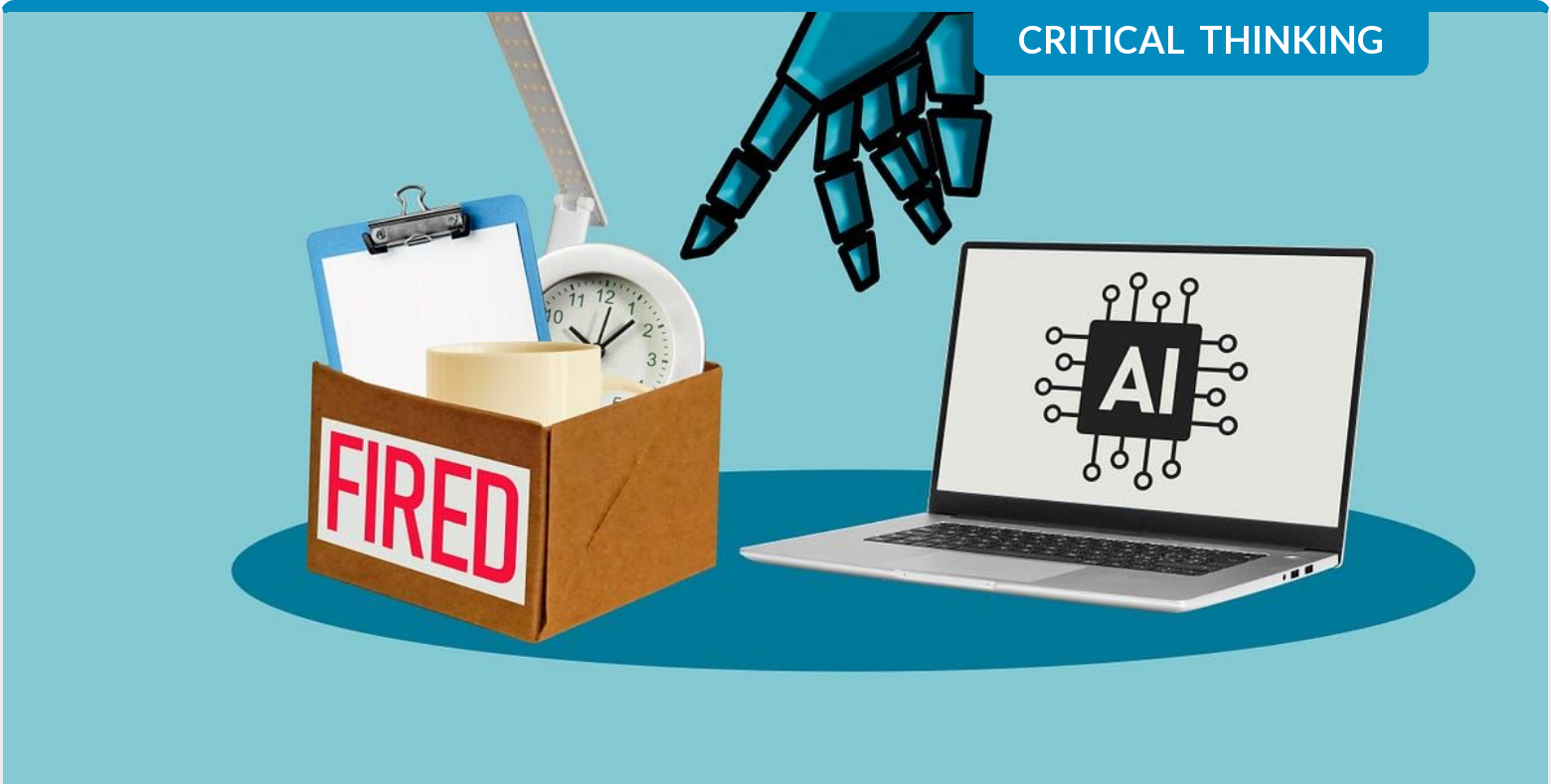
What’s Really Going On With AI and Society? AI isn’t just accelerating, it’s reshaping trust, labor, and the human experience faster than most institutions can keep up. But beneath the hype lies a deeper tension: Are we designing technology to empower people or to extract their attention? The Center for Humane Technology breaks down the current AI landscape in plain language. Instead of focusing on future threats like “rogue AGI,” the authors spotlight today's realities: increasingly persuasive chatbots, emotionally manipulative algorithms, and a race for scale that often outpaces ethical reflection. The challenge isn’t just about regulating machines. It’s about ensuring that human agency, dignity, and judgment aren’t outsourced in the process.
|
|||
|
|

|
|||
|
Americans Want to Live to 91 (And Stay Healthy Doing It) According to recent Pew Research data, Americans on average say their ideal lifespan is 91 years. But it’s not just about more years, it’s about better ones. Most respondents say they’d only want a longer life if they can stay mentally sharp, physically mobile, and socially connected. Only 19% said they’d want to live to 100, underscoring that longevity alone isn’t the goal. Respondents prioritized things like purpose, dignity, and independence over simply “living longer.” As society grapples with aging populations and medical breakthroughs, the focus may shift from life extension to life enrichment.
|
|||
|
|
|
|
|||
|
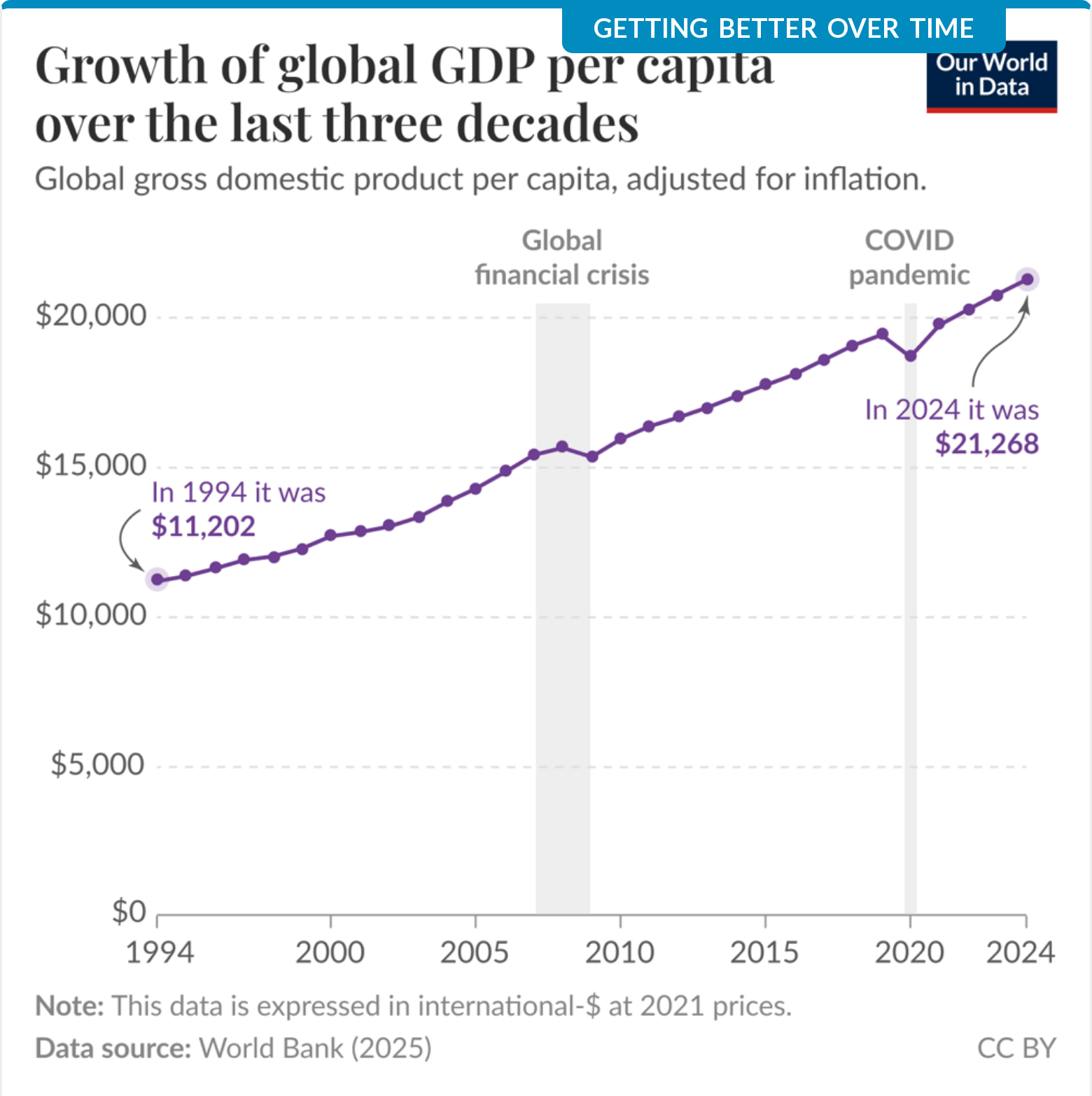
Global GDP Per Capita Grows Steadily Despite Turbulence It rarely makes headlines, but global economic well-being has grown steadily for three decades. New data shows that GDP per capita — a key measure of average economic prosperity — has increased almost every year since the 1990s, even through periods of crisis. The consistency is striking. While individual countries face setbacks, the overall trajectory is one of resilience and growth, especially in developing nations. This long-term view suggests that progress is often quiet, gradual, and cumulative — the opposite of what most news cycles reflect.
|
|||
|
|
|
|||
|
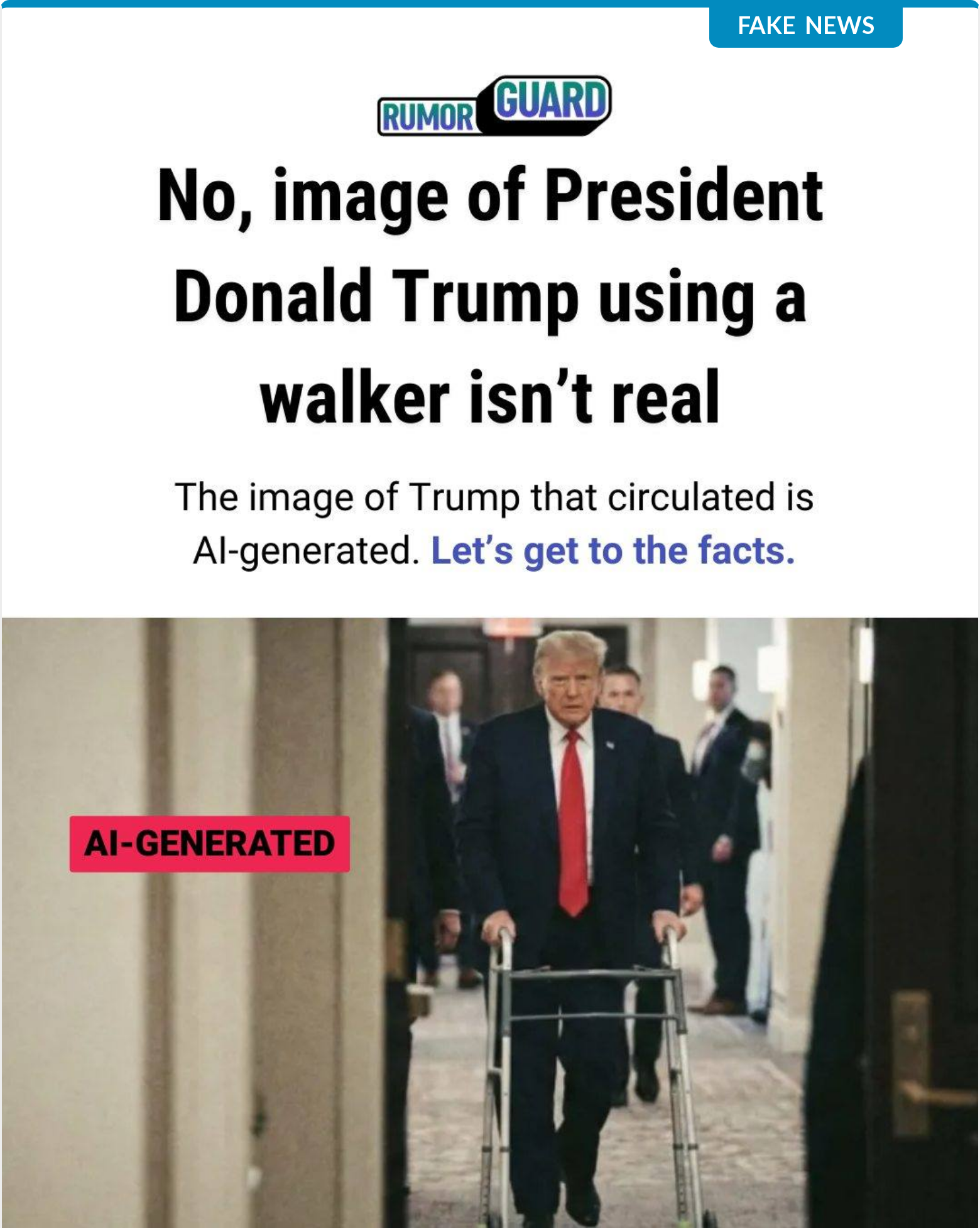
President Trump Using a Walker After Signing an Executive Order Isn't Real 🧐 What the claim says 🚫 Why it’s false ✅ What’s real 👉 Learn more: For deeper media literacy and hoax‑spotting tools, check outhttps://newslit.org/checkology-resources/
|
|||
|
|
|


|
|
|
|
|
Copyright © Getting Better Foundation. All rights reserved. |